Bodyweight Exercises: Building Strength Without Equipment
- Flex and Fuel

- Feb 21, 2025
- 4 min read
Why Bodyweight Exercises?
Bodyweight exercises are a powerful and versatile way to build strength, endurance, and mobility without relying on external weights or machines. By using your own body as resistance, you can achieve impressive fitness results while enhancing overall functionality. Whether you're a beginner looking to get started with strength training or an experienced athlete wanting to refine your movements, bodyweight exercises offer a scalable and effective solution.

Why Should You Incorporate Bodyweight Training?
Convenience & Accessibility – One of the biggest advantages of bodyweight exercises is that they require no equipment or gym membership. You can do them anytime, anywhere—at home, in a park, or while traveling. This makes them an excellent option for those with busy schedules or limited access to a gym.
Functional Strength – Unlike machine-based exercises that isolate specific muscles, bodyweight movements engage multiple muscle groups simultaneously. These exercises mimic natural, everyday movements like pushing, pulling, squatting, and lunging, helping you develop real-world strength that translates into daily activities.
Improved Balance & Coordination – Because bodyweight exercises challenge your body to stabilize itself without external support, they activate smaller stabilizing muscles, improve proprioception, and enhance coordination. This is particularly beneficial for athletes, older adults, and anyone looking to improve overall movement quality.
Scalability & Progression – Whether you're a beginner or an advanced trainee, bodyweight exercises can be adjusted to suit your fitness level. By modifying the leverage, tempo, or range of motion, you can make exercises easier or more challenging without the need for weights.
Injury Prevention & Joint Health – Unlike heavy lifting, bodyweight training places less strain on the joints while still building strength. Movements like squats, lunges, and push-ups encourage mobility, flexibility, and joint stability, reducing the risk of injury over time.
Efficient Workouts – With bodyweight exercises, you can combine strength training and cardio into a single session. High-intensity movements like burpees, jump squats, and mountain climbers elevate the heart rate, making them great for fat loss and cardiovascular endurance.

Structuring a Bodyweight Home workout Plan for Strength
Warm-Up (5-10 Minutes)
Jumping jacks
High knees
Arm circles
Dynamic stretches for mobility
Workout
Push-Ups: 12–15 reps, 4 sets
Squats: 15–20 reps, 5 sets
Pull-Ups (or Inverted Rows, if available): 12–15 reps, 4 sets
Lunges (each leg): 12–15 reps, 4 sets
Plank: 30–60 seconds, 2 sets
Burpees: 10–12 reps, 4 sets
1. Push-Ups
Muscles Worked: Chest, shoulders, triceps, and core.
How to Do It: Begin in a plank position, with your hands under your shoulders. Lower your body until your chest is just above the ground, then push back up.
Variations: Try knee push-ups (beginner), decline push-ups (advanced), or plyometric push-ups (explosive power).
2. Pull-Ups (If You Have a Bar)
Muscles Worked: Back, shoulders, and biceps.
How to Do It: Grip the bar with palms facing forward, hang, then pull yourself up until your chin is above the bar.
Variations: Use a resistance band for support (beginner) or add a pause at the top for more muscle engagement (advanced).
3. Planks
Muscles Worked: Core, shoulders, and glutes.
How to Do It: Start on your elbows and toes, keeping your body in a straight line from head to heels. Hold for as long as you can while engaging your core.
Variations: Side plank, high plank (on hands), or plank with arm/leg raises to add difficulty.
4. Squats
Muscles Worked: Quadriceps, hamstrings, glutes, and core.
How to Do It: Stand with feet hip-width apart, then lower yourself into a squat, keeping your chest up and knees aligned over toes. Push through your heels to stand.
Variations: Try single-leg squats or jump squats for extra intensity.
5. Lunges
Muscles Worked: Quadriceps, glutes, hamstrings, and core.
How to Do It: Step forward with one leg and lower your body until both knees are at about 90-degree angles, then push back to starting position.
Variations: Walking lunges, reverse lunges, or plyometric jump lunges for added challenge.
6. Dips (Using a Chair or Bench)
Muscles Worked: Triceps, shoulders, and chest.
How to Do It: Place your hands behind you on a bench or chair, with legs extended. Lower yourself by bending your elbows, then push back up.
Variations: Adjust the angle of your legs to modify difficulty or try triceps push-ups for a different challenge.
7. Burpees
Muscles Worked: Full-body, especially legs, chest, shoulders, and core.
How to Do It: Begin standing, then drop into a squat, place your hands on the floor, kick your feet back into a plank, do a push-up, then jump back to standing.
Variations: Half burpees (no push-up) or add a jump at the top for high-intensity training.
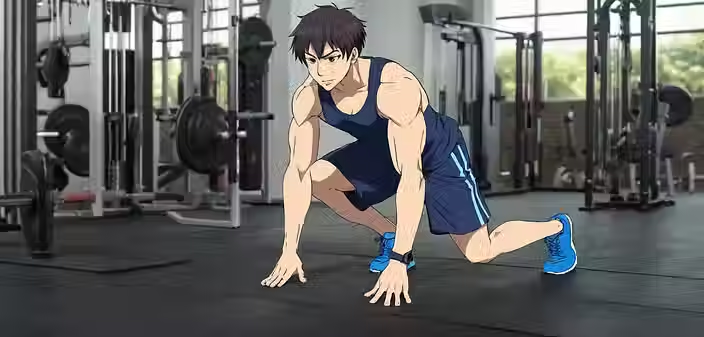
Bodyweight exercises offer an effective, accessible way to build strength and endurance without any equipment. They can be as challenging as you make them, so don’t be fooled by their simplicity. By mastering your body’s movements, you’ll build functional strength that benefits every aspect of your life. Whether you're a beginner or an experienced athlete, bodyweight training is a valuable addition to your fitness routine. Embrace the power of bodyweight exercises and discover the strength you can build with nothing but your own body!